Artificial intelligence is changing the way we learn, work, communicate and build careers.
Tasks that once required hours of manual effort can now be completed with the assistance of AI tools. Information is more accessible, workflows are evolving and new opportunities are emerging across industries.
But here’s an important question:
Are you developing the skills needed to thrive in this changing world?
Knowing how to use AI tools is useful, but it is not enough. The future also requires people who can think critically, communicate effectively, adapt to change and solve real-world problems.
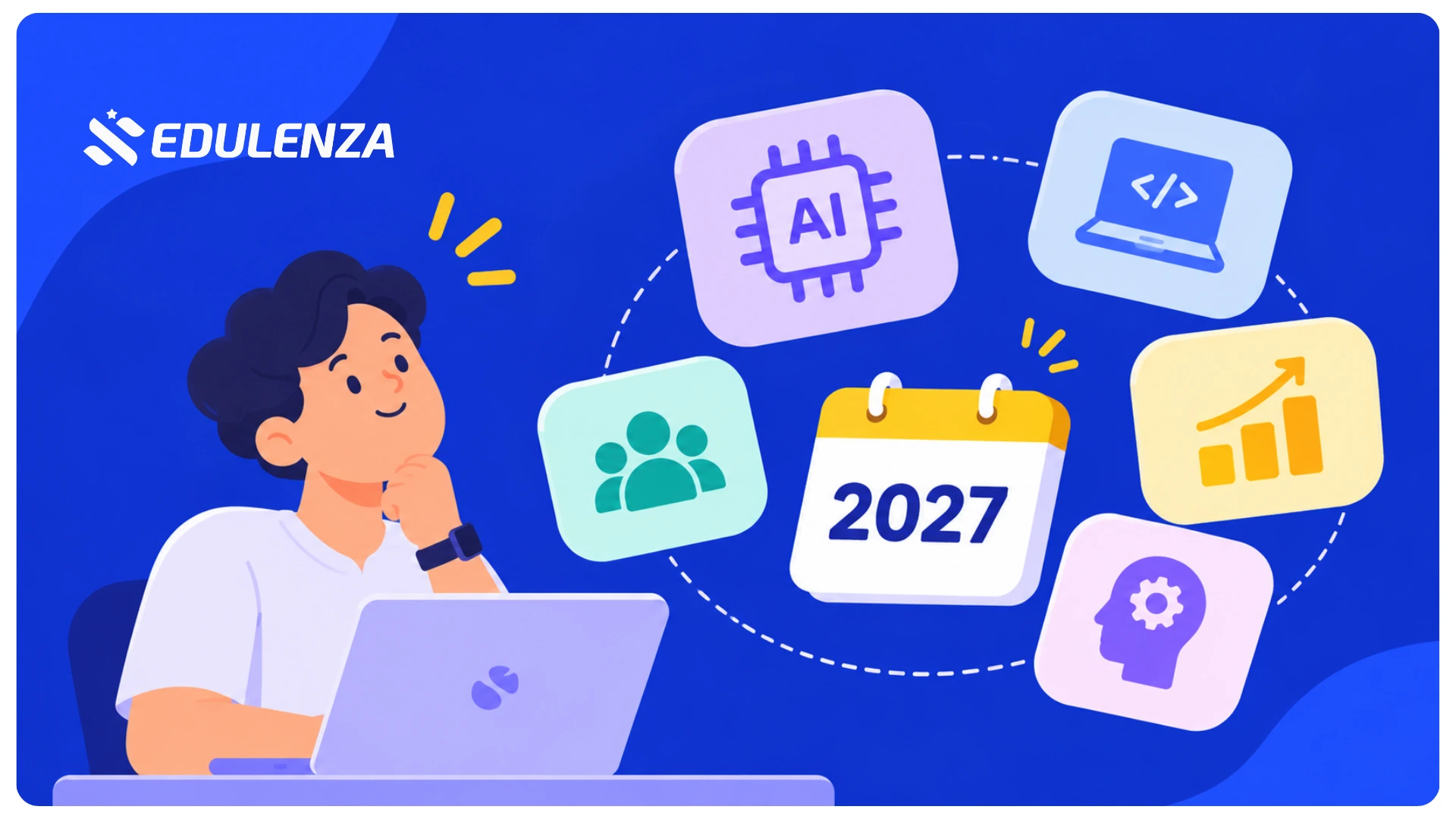
As we approach 2027, here are five important skills worth developing to stay relevant and future-ready.
1. AI Literacy: Learn to Work With Artificial Intelligence
AI is becoming part of everyday education, business and professional workflows.
From writing and research to data analysis and automation, AI tools can help people complete tasks more efficiently.
However, simply knowing the names of popular AI applications doesn’t make someone AI-literate.
AI literacy involves understanding what AI can do, where it has limitations and how to use it responsibly.
What you should learn:
- How to write effective prompts.
- How to use AI tools for research and productivity.
- How to evaluate AI-generated information.
- How to identify inaccurate or misleading outputs.
- How to use AI responsibly and protect sensitive information.
Practical challenge: Choose one repetitive task in your daily routine and experiment with using AI to simplify it. Check the output carefully before relying on it.
2. Critical Thinking: Learn to Question Information
AI can generate answers within seconds. But not every answer is accurate, complete or appropriate.
This makes critical thinking increasingly important.
Critical thinking is the ability to examine information, question assumptions, evaluate evidence and make informed decisions.
Instead of accepting every answer from an AI tool, develop the habit of asking:
- Is this information accurate?
- What evidence supports this answer?
- Are there alternative explanations?
- What important information might be missing?
- Does this solution make sense in the real world?
Practical challenge: Whenever you receive an important answer from an AI tool, verify it using reliable sources and consider alternative viewpoints.
3. Communication: Learn to Express Your Ideas Clearly
Having knowledge is valuable. Being able to communicate that knowledge is equally important.
Whether you are a student, entrepreneur, employee or freelancer, communication influences how effectively you share ideas, collaborate and build professional relationships.
AI can help generate messages and presentations, but people still need to understand their audience, context and purpose.
What you should develop:
- Public speaking.
- Written communication.
- Active listening.
- Presentation skills.
- Professional communication.
- Collaboration and interpersonal skills.
Practical challenge: Explain a topic you understand in two minutes without reading from a script. Practise until your explanation becomes clear and natural.
4. Adaptability and Learning Agility: Learn, Unlearn and Relearn
Technology and industries will continue to change.
The tools, processes and knowledge that are valuable today may evolve tomorrow.
Adaptability is the ability to respond positively to new situations, while learning agility is the ability to acquire and apply new knowledge when circumstances change.
Instead of depending entirely on what you already know, build a habit of continuous learning.
What you should develop:
- Curiosity and willingness to explore.
- Ability to learn unfamiliar tools.
- Openness to feedback.
- Comfort with change and uncertainty.
- Self-directed learning habits.
Practical challenge: Choose one new skill outside your comfort zone and dedicate 20 minutes every day to learning and practising it for a week.
5. Problem-Solving and Creativity: Learn to Find Better Solutions
AI can generate suggestions, analyse information and assist with many tasks.
But identifying the right problem, understanding its context and deciding which solution is useful still require human judgement.
Problem-solving involves understanding challenges, identifying possible approaches and evaluating solutions.
Creativity helps you connect different ideas and develop new possibilities.
Together, these capabilities can help you contribute value in different industries and situations.
What you should develop:
- Identifying the root cause of problems.
- Brainstorming alternative solutions.
- Creative thinking.
- Logical reasoning.
- Decision-making.
- Experimentation and evaluation.
Practical challenge: Identify one small problem in your college, workplace or everyday life. Develop three possible solutions and test which one works best.
How to Start Developing These Five Skills
You don’t need to master everything in one month.
Start with a simple weekly learning routine.
| Day | Skill | Activity |
|---|---|---|
| Monday | AI Literacy | Explore and practise one AI application |
| Tuesday | Critical Thinking | Analyse and verify a piece of information |
| Wednesday | Communication | Practise explaining an idea |
| Thursday | Adaptability | Learn something unfamiliar |
| Friday | Problem-Solving | Work on a real-world challenge |
| Saturday | Application | Apply what you learned |
| Sunday | Reflection | Review your progress |
Consistency matters more than trying to learn everything at once.
Final Thoughts: Prepare Yourself for the Future
The AI era is not simply about machines becoming more capable.
It is also about people learning how to use technology effectively while strengthening the capabilities that help them navigate complex situations.
AI literacy, critical thinking, communication, adaptability and problem-solving are five valuable areas to invest in.
You don’t have to wait until 2027 to begin.
Start today. Choose one skill. Practise consistently. Build on what you learn.
Don’t just prepare to use the future. Prepare yourself to thrive in it.
At Edulenza, we believe learning should go beyond memorising information. It should develop practical skills, encourage curiosity and build confidence for life.
Keep learning. Keep growing. Keep evolving.
— Team Edulenza
Want to improve your skill, Learn at www.edulenza.com